
Why Is My Heat Pump Dripping Water?
A practical guide for homeowners who have water dripping from their indoor heat pump, water running down the wall, or moisture appearing where it should not be.
Why is my heat pump dripping water -Quick Answer
If your indoor heat pump is dripping water onto the wall, floor, or out through the front louvres, the most common cause is a blocked or restricted condensate drain.
In cooling mode, your heat pump naturally removes moisture from the air. That water should collect in a drain tray inside the unit and flow outside through a drain pipe. If the drain blocks with mould, algae, dust, insects or debris, the tray can fill up and overflow.
What you’ll learn
- Why heat pumps produce water
- Where the water should drain
- Why indoor drains block up
- How mould and algae cause leaks
- Why the outdoor drain pipe can block
- What homeowners can safely check
- When a deep clean service is needed
- Why correct coil cleaner matters
Before you panic
A heat pump producing water is normal in cooling mode. The problem starts when that water cannot drain away properly. Most indoor water leaks are drainage issues rather than the heat pump suddenly “making too much water”.
Quick Checks First
| Is water dripping inside? | Water dripping from the indoor unit usually means the condensate drain is blocked, restricted or not draining correctly. |
| Is water dripping outside? | Water from the outside drain pipe during cooling mode can be completely normal. |
| Check the filters | Dirty filters reduce airflow and can make condensation problems worse. |
| Look at the coil | If the coil behind the filters looks black, mouldy or dirty, the unit is due for a proper deep clean. |
| Check the outside drain | Insects, spider webs, leaves and debris can block the outdoor end of the drain pipe. |
| Avoid harsh cleaners | Do not spray household cleaners, bleach or corrosive products onto the indoor coil. |
Why Do Heat Pumps Produce Water?
Many homeowners are surprised to learn that a heat pump is designed to produce water during cooling mode. The heat pump does not create this water from nowhere — it removes moisture that is already present in the air inside your home.
When the heat pump is cooling, warm humid room air is drawn through the indoor unit and blown across the cold evaporator coil. As that warm air contacts the cold aluminium fins, moisture condenses into tiny water droplets. This is similar to condensation forming on the outside of a cold drink on a warm day.
This process is completely normal. Removing moisture from the air is one reason a heat pump can make a room feel more comfortable in summer.

Where Should the Water Go?
Inside the indoor unit, the evaporator coil sits above a drain pan or trough. As condensation forms on the coil, the water droplets run down the coil fins and drip into this tray.
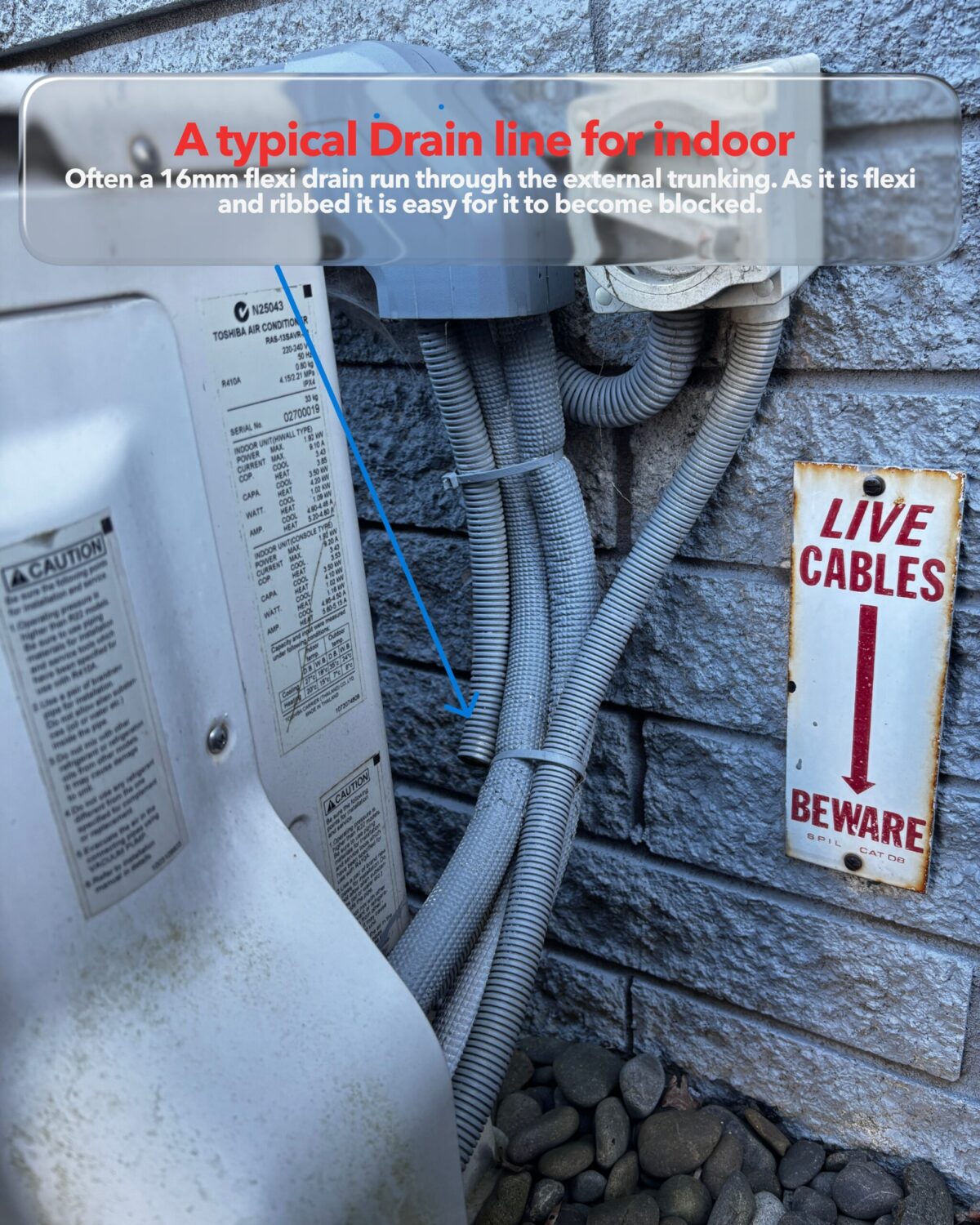
From there, the water should flow through a small drain outlet and along the condensate drain pipe to the outside of the house. On a humid day, it can be normal to see water dripping from the drain pipe outside while the heat pump is running in cooling mode.
The simple version is this: the indoor unit collects moisture from the air, the drain tray catches it, and the drain pipe carries it outside. If any part of that drainage path becomes blocked, water can back up and leak from the indoor unit.
Why Heat Pump Drains Become Blocked
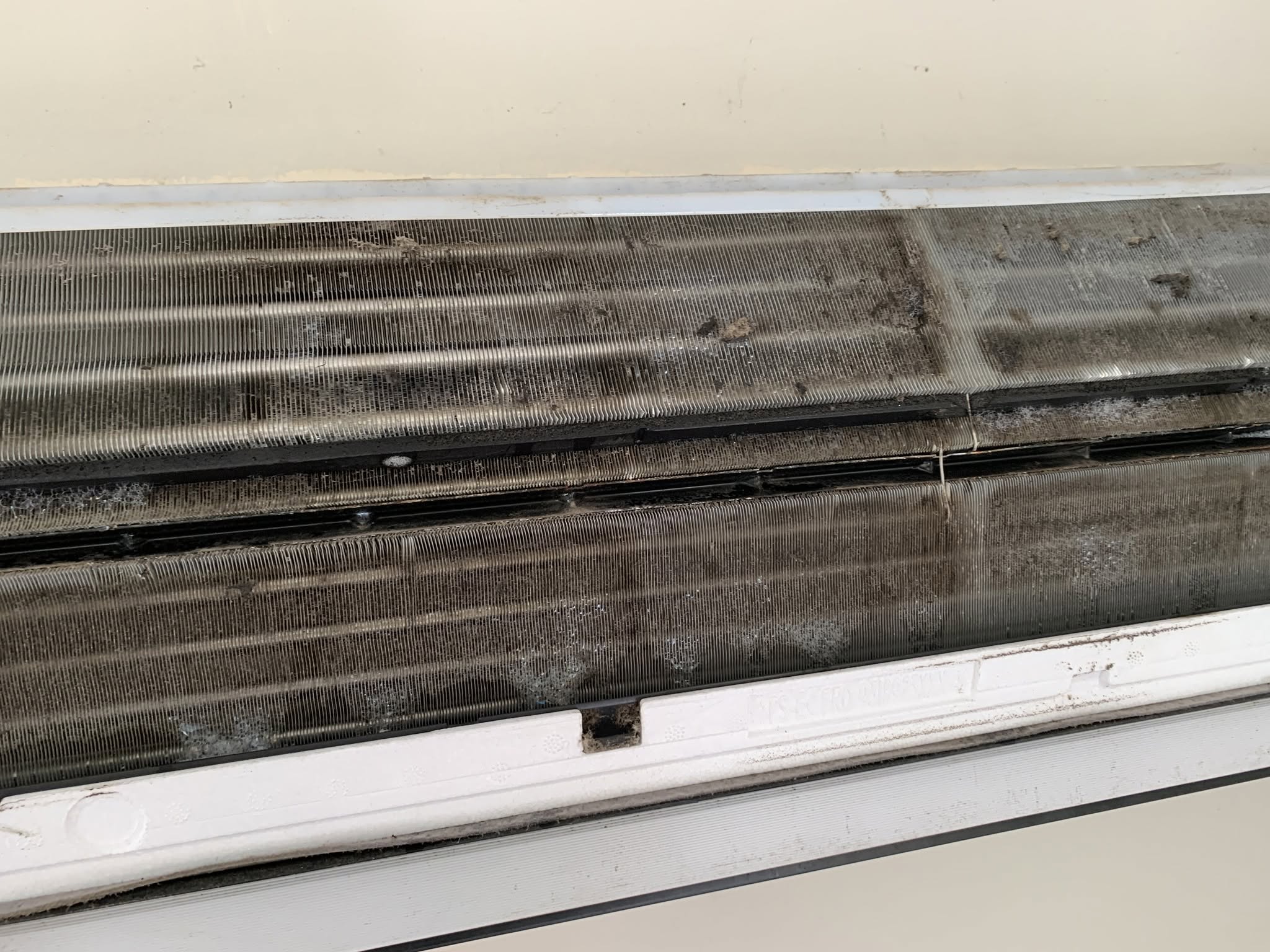
The inside of a heat pump can become an ideal environment for mould, algae and biofilm to grow. The evaporator coil is regularly exposed to moisture, dust, cold temperatures while cooling, and warmer temperatures when the unit stops.
Over time, grime and biological growth can build up on the coil and in the drain tray. As condensation continually washes over the coil, small amounts of dust, mould, algae and slime can be carried down into the drain pan.
The drain outlet is usually quite small, so it does not take much build-up before the drain begins to slow down. Eventually the drain can become completely blocked. When that happens, the drain tray fills up and the water has nowhere to go.
Water may then overflow from the front of the indoor unit, drip from the fan vanes, run down the wall, or leak from the back or underside of the unit.

The Outdoor Drain Pipe Can Also Become Blocked
Not every blockage starts inside the indoor unit. Sometimes the problem is at the outside end of the condensate drain pipe.
Because the drain pipe terminates outside, insects, spiders, garden debris, leaves, dirt or algae can block the end of the pipe. If the outlet is blocked, water cannot escape freely and may back up toward the indoor unit.
If your heat pump has been running in cooling mode for a while and you cannot see any water coming out of the drain pipe outside, it is worth checking whether the pipe outlet is blocked.
Can High Humidity Make a Heat Pump Spit Water?
In very humid conditions, a heat pump can remove a large amount of moisture from the air. If the unit is set extremely cold, or airflow is restricted by dirty filters or a dirty coil, the indoor coil and surrounding components can become excessively wet.
In some situations, water can collect where it should not, or droplets can be picked up by the indoor fan and blown out through the front of the unit. This can look like the heat pump is “spitting” water.
However, if water is actively dripping from the indoor unit, the drain system should still be checked. High humidity may make the problem more noticeable, but a blocked drain, dirty coil, poor airflow or drainage issue is usually still part of the cause.
When Should You Get Your Heat Pump Serviced?
Cleaning the filters is the first thing homeowners should keep on top of. As a general guide, filters should be cleaned every five to six weeks during regular use, or more often in dusty homes, pet homes or high-use areas.
A good visual check is to remove the filters and look at the coil behind them. If the coil is starting to look black, mouldy, dusty or dirty, the unit is well due for a proper deep clean service.
A professional indoor heat pump service helps prevent water leaks by cleaning the areas that homeowners cannot properly access. This may include cleaning the indoor coil, washing and sanitising the internal surfaces, cleaning the drain tray, flushing the condensate drain and checking that water can flow freely to the outside.
Be Careful What You Spray on an Indoor Coil
Not all cleaning products are safe to use inside a heat pump. The indoor evaporator coil is made from delicate aluminium fins and copper tubing. Harsh or corrosive products can damage these components, reduce efficiency and potentially shorten the life of the unit.
Household cleaners, bleach, acidic cleaners, strong degreasers and corrosive chemicals should not be sprayed onto the indoor coil unless they are specifically approved for heat pump or air conditioning use.
Professional heat pump cleaning products are specifically designed for indoor coils. They are typically non-acidic, coil-safe and formulated to help remove dirt, mould, bacteria, fungi and biofilm without damaging the delicate coil surfaces when used correctly.
Things You Can Check Yourself
Frequently Asked Questions
Is it normal for a heat pump to drip water outside?
Yes. During cooling mode, the indoor unit removes moisture from the air and drains it outside. It can be normal to see water dripping from the condensate drain pipe outside, especially on humid days.
Is it normal for water to drip from the indoor unit?
No. Water dripping from the indoor unit, front louvres, wall or underside usually means the condensate drain is blocked, restricted, disconnected or not draining correctly.
Can dirty filters cause a heat pump to leak water?
Dirty filters can reduce airflow across the indoor coil. Poor airflow can make the coil run too cold, increase condensation issues and contribute to icing or water carry-over. Filters should be cleaned regularly.
How often should I clean my heat pump filters?
As a general guide, clean the filters every five to six weeks during regular use. Homes with pets, dust, heavy use or cooking nearby may need more frequent cleaning.
When does a heat pump need a professional deep clean?
If the coil behind the filters looks black, mouldy, dusty or dirty, the unit is due for a professional deep clean. Odours, poor airflow, water leaks and visible mould are also signs that servicing is needed.
So, Why Is Your Heat Pump Dripping Water?
In most cases, an indoor heat pump dripping water is caused by a blocked or restricted condensate drain. The heat pump is still producing normal condensation, but that water is no longer able to drain safely outside.
The blockage may be caused by mould, algae, dust and biofilm inside the unit, or by insects and debris at the outside drain outlet. Dirty filters, dirty coils, high humidity and poor airflow can also make the issue worse.
Keeping filters clean and booking periodic professional servicing helps keep the indoor coil, drain tray and condensate drain clean, reducing the chance of water overflowing from the indoor unit.
Related Guides
To keep this guide focused, these related questions are best covered in their own articles.
Need help with a leaking heat pump?
If your indoor unit is dripping water, we can inspect the drain, clean the coil, flush the condensate line and service the unit properly.