Should I Upgrade My Lights to LED?
A practical New Zealand homeowner’s guide to LED lighting, running costs, colour temperature, dimming, recessed fittings, old halogen transformers and when it’s worth replacing the entire fitting. While the energy cost comparisons can be used for most lighting installations, the advice and upgrade recommendations throughout this guide are aimed primarily at residential homes.
Should I Upgrade my Lights to LED? Quick Answer
In most homes, upgrading to LED lighting is well worth it. LED lights use far less power than older halogen or incandescent lamps, last longer, produce less heat and can provide better light quality.
If you have older recessed halogen downlights, I usually recommend replacing the entire fitting rather than just swapping the bulb. Modern LED downlights generally look cleaner, spread light better, can be colour selectable and often help seal the air gap between your room and ceiling space.
What you’ll learn
- Why LEDs save power
- How much your lights may cost to run
- When to replace the full fitting
- Why old halogen transformers can flicker
- How LED colour temperature works
- Why 3000K suits living areas
- What sunset dimming means
- Why beam angle and CRI matter
Version 1 note
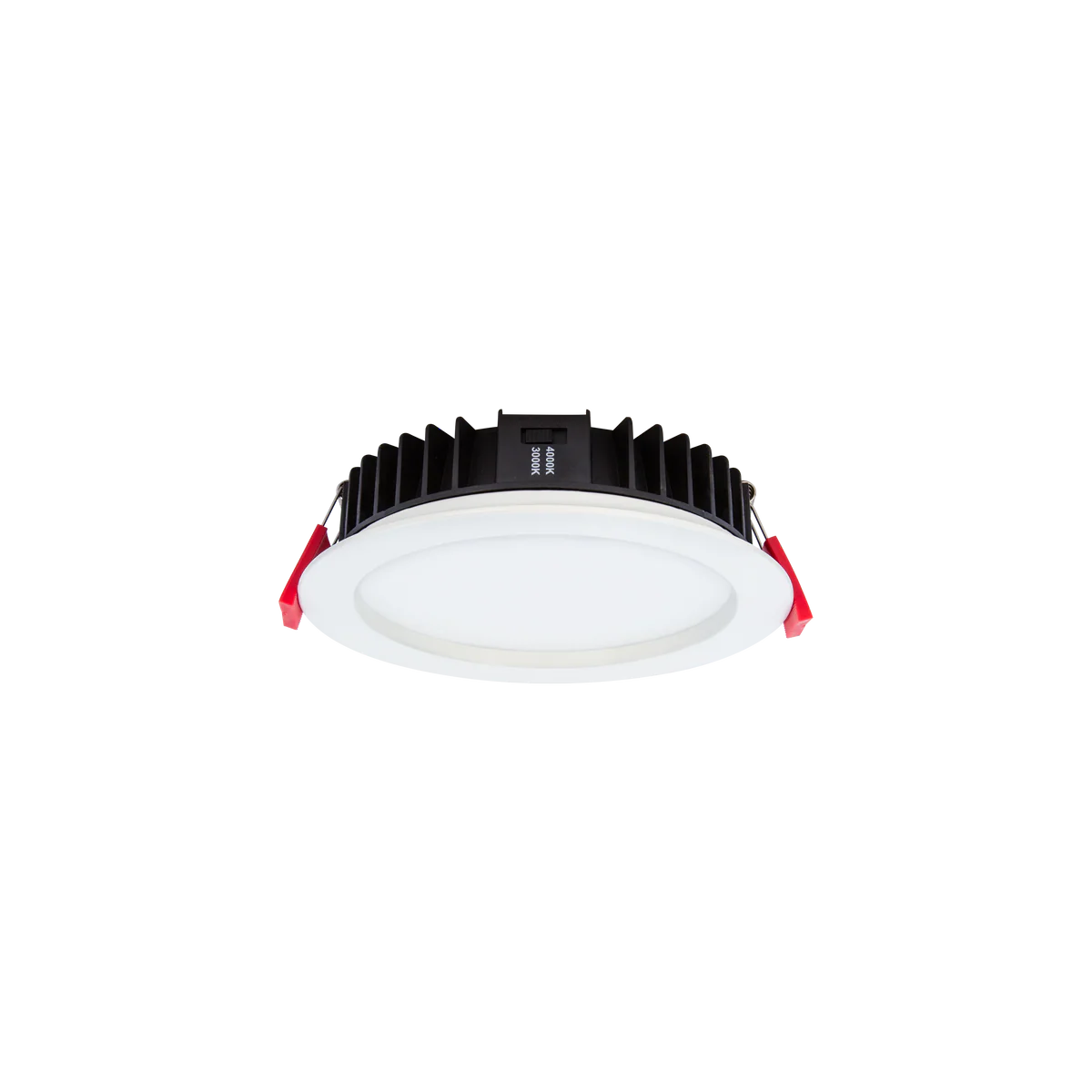
This first version keeps the page clean and practical. Image placeholders have been left for a colour-selectable LED fitting and a real high-ceiling kitchen lighting example. These can be swapped for your own photos once uploaded to WordPress Media.
LED Lighting Upgrade Summary
| Best quick win | Replace high-use halogen or incandescent lights first, especially in living areas, kitchens, hallways and outdoor lighting. |
| Recessed lights | If the existing lights are older recessed halogens, replacing the complete fitting is usually better than only changing the bulb. |
| Old MR16 halogens | Some old 20–60W electronic transformers do not work properly with 5–8W LED lamps and may cause flickering or strobing. |
| Best colour mix | For most homes, 3000K warm white works best in living areas and bedrooms, while 4000K suits kitchens, bathrooms, laundries and offices. |
| Modern downlights | Many modern LED downlights are colour selectable, sealed and IC-rated to be covered with insulation when installed correctly. |
| Premium option | Sunset dimming changes the colour warmer as the light dims, creating a natural evening feel in lounges and bedrooms. |
Why Are So Many Homeowners Upgrading to LED?
LED lighting has become the standard choice for modern homes because it is efficient, long-lasting and flexible. Compared with older incandescent and halogen lamps, LED lights can produce the same or better usable light while using a fraction of the electricity.
For homeowners, the main advantages are simple: lower running costs, less heat, less maintenance and a cleaner modern look. A quality LED upgrade can also improve how a room feels, especially when the right colour temperature and beam angle are selected.
The biggest mistake is assuming all LED upgrades are the same. In some homes, a simple lamp swap is fine. In others, especially where old recessed halogen fittings and transformers are involved, replacing the full fitting is usually the better long-term option.
| Light type | Typical wattage | General comment |
|---|---|---|
| Incandescent | 40–100W | Very inefficient and produces a lot of heat. |
| Halogen downlight | 35–50W | Common in older homes, hot running and expensive compared with LED. |
| CFL | 10–20W | More efficient than incandescent but slower to start and now mostly outdated. |
| LED | 5–12W | Efficient, long lasting, low heat and available in many colour options. |
How Much Can LED Lights Save?
This calculator provides a rough comparison of the annual running costs between your existing lights and LED lighting. It can be used for both residential and commercial lighting by entering the number of fittings, wattage and average daily operating hours.
Please note: The Estimated Upgrade Cost and Estimated Payback figures are based on a typical domestic recessed LED downlight replacement only. Commercial lighting projects vary significantly depending on the type of fittings, mounting height, access equipment, emergency lighting, controls, wiring alterations and installation complexity. For commercial projects, use this calculator as an energy cost comparison only.
LED Savings Calculator
Enter a rough estimate for one group of lights. For example, 20 old 50W halogen downlights used for 4 hours per day.
Pricing note: This is not a fixed quote. LED upgrade pricing depends on the number of lights, access, travel, wiring condition, existing fittings, dimmers, transformer compatibility and the type of LED fitting required. Small jobs may be subject to a minimum call-out or one-hour charge.
Should I Just Replace the Bulb or Upgrade the Entire Fitting?
Many homeowners ask whether they should simply replace their old halogen bulb with an LED lamp or replace the entire downlight fitting. While replacing the bulb is often the cheapest option, my recommendation for most recessed ceiling lights is to replace the entire fitting, especially if your existing lights are older halogen downlights.
Modern integrated LED downlights generally provide a better spread of light, are often brighter for the power used, look cleaner on the ceiling and remove many of the compatibility issues that can come with old transformers and worn lampholders.
That air gap matters. Older recessed halogen fittings could act like small holes in your ceiling. Warm air from the room could escape into the roof space, especially during winter when you have already paid to heat that air.
With many modern recessed LED fittings, the fitting is sealed and IC-rated, meaning it can be covered with insulation when installed in accordance with the manufacturer’s instructions. This helps maintain your ceiling insulation and keeps more heat inside the room where it belongs.
Why IC-Rated LED Downlights Are a Big Win
Older recessed halogen downlights produced a lot of heat. Because of the fire risk, insulation had to be kept clear of many older fittings. In some homes this meant cutting lots of holes through the ceiling insulation wherever recessed lights were installed.
Think about a new home with dozens of downlights. You spend money creating a thermal blanket above the ceiling, then every old-style recessed light creates a break in that blanket. Add gaps around the light fitting itself and warm air can escape straight into the roof space.
Modern LED downlights run much cooler. Many quality recessed LED fittings are IC-rated or IC-F rated, depending on the product, and are designed to be installed with insulation over or around them according to the manufacturer’s instructions.
This is a massive advantage because the upgrade is not only about saving electricity at the lamp. It can also help improve how well your ceiling performs as part of the home’s thermal envelope.
Why Some LED Lamps Flicker in Old Halogen Fittings
Some older recessed halogen lights use MR16 lamps powered by small electronic transformers. These transformers were designed for halogen lamps, not low-wattage LEDs.
A common older transformer rating might be something like 20–60 watts. That worked fine when the fitting had a 35W or 50W halogen lamp connected to it. But if you replace that lamp with a modern 5–8W LED, the LED may not meet the transformer’s minimum load.
When the transformer does not see enough load, the LED may flicker, strobe, flash, fail to start properly or behave unreliably. This is one reason some “simple” LED lamp swaps do not work as expected.
In this situation, the options are usually to replace the transformer with an LED-compatible driver, change to a different style of fitting, or upgrade the complete recessed light to an integrated LED downlight.
Understanding LED Colour Temperature
Colour temperature is measured in Kelvin, shown as K. It does not describe how hot the light gets. It simply describes the colour appearance of the light, from a warm yellow glow through to a cooler white daylight.
Lower Kelvin numbers look warmer and softer. Higher Kelvin numbers look cooler, brighter and more energetic.
| Colour | Appearance | Best suited for |
|---|---|---|
| 2700K | Very warm white | Bedrooms, lounges and cosy evening spaces. |
| 3000K | Warm white | Living rooms, bedrooms, dining rooms, hallways and most general home areas. |
| 4000K | Neutral white | Kitchens, bathrooms, laundries, offices, garages and task areas. |
| 5000K | Cool daylight | Workshops, utility spaces and areas needing very crisp task lighting. |
For most homes I recommend sticking with 3000K or below for living areas and bedrooms. Warm white lighting helps a space feel calmer and more comfortable, which is ideal when you are relaxing or winding down in the evening.
Cooler colours such as 4000K and 5000K are brighter and more energetic. They can help with focus and visibility, which makes them useful in kitchens, bathrooms, laundries and offices. However, some people find cooler colour temperatures too stimulating or clinical throughout an entire home.
Sunset Dimming: LED Lighting That Gets Warmer as It Dims
Most standard dimmable LEDs simply get darker when you turn them down. Sunset dimming, also called warm dimming or dim-to-warm, is different.
With sunset dimming, the LED changes colour as it dims. At full brightness it may be around 3000K warm white. As you dim it down, it gradually becomes warmer, often ending around 2700K at low brightness.
This creates an effect similar to the sun setting or an old incandescent lamp becoming warmer as it dims. It feels much more natural in the evening than standard LED dimming.
Sunset dimming is especially nice in lounges, bedrooms, media rooms and dining areas where you want bright usable light when needed, but a softer warm atmosphere later at night.
Lighting Is Not Just About Brightness
Many people compare lights by wattage or lumen output, but that is only part of the story. How the light spreads and how accurately it shows colours can make a huge difference to the final result.
Colour Rendering Index (CRI)
CRI stands for Colour Rendering Index. It describes how accurately a light source displays colours compared with natural daylight. A higher CRI can make timber, paint colours, benchtops, artwork and food look more natural.
For general home lighting, a CRI of 80 or above is common. In higher-end homes, kitchens, bathrooms or areas where finishes matter, high CRI fittings can give a noticeably better result.
Beam Angle
Beam angle describes how widely the light spreads from the fitting. Many recessed LED downlights used for general room lighting have a wide beam angle, often around 90–110 degrees. This is great for evenly lighting normal ceiling-height rooms.
However, a wide beam angle is not always the best solution. If the ceiling is very high, the light spreads out before it reaches the surface you are trying to illuminate. In that situation, a narrower beam angle may be required to keep the light concentrated.
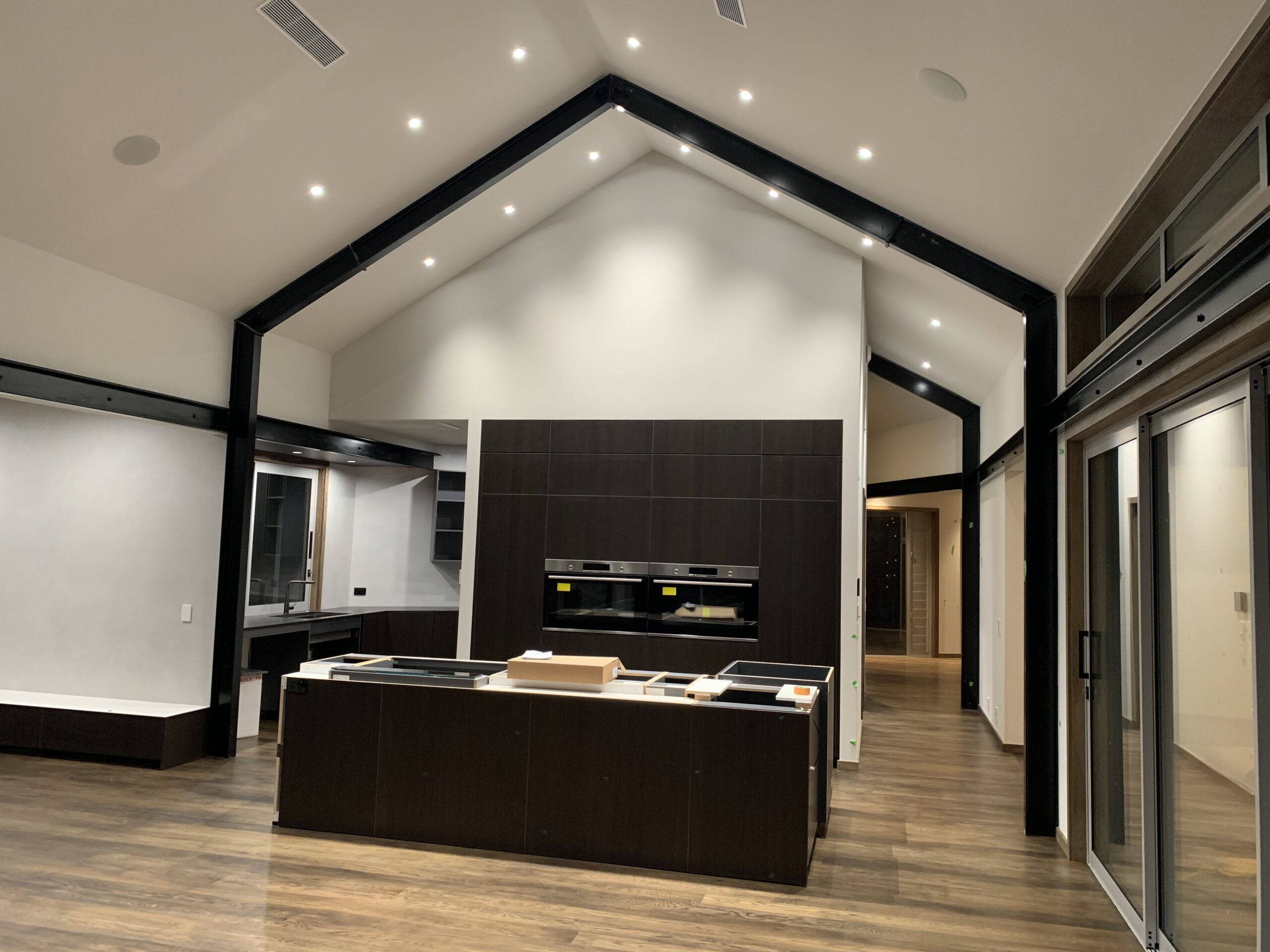
High Raked Ceiling Kitchen Lighting Example
One project that stands out involved a high-spec architectural home with a raked ceiling over five metres high in the centre. The customer wanted the breakfast island to be bright, but did not want any pendant lights hanging down over the bench.
A normal wide-beam recessed LED downlight would have lost too much intensity by the time the light reached bench height. Even if the total lumen output looked good on paper, the light would have spread too widely and the island would not have had the focused task lighting the customer wanted.
For this job I used Switch Lighting fittings with a much narrower 20 degree beam angle. We installed a row of fittings along each side of the raked ceiling and positioned them closer together than normal, approximately 450mm apart, so the beams overlapped and concentrated the light at bench height.
The result was a bright, clean kitchen workspace without needing pendant lights, while still keeping the architectural look the customer wanted.
What I Look for When Upgrading Lights to LED
After replacing thousands of lights throughout Waikato homes, the best LED upgrades are usually the ones where the whole result is considered, not just the wattage of the lamp.
Frequently Asked Questions
Are LED lights worth upgrading to?
Yes, in most homes LED lighting is worth upgrading to because it uses far less power than older lighting, lasts longer, produces less heat and can improve the look and feel of the home.
Can I just replace my halogen bulbs with LED bulbs?
Sometimes, but not always. Some older halogen fittings use transformers that are not compatible with low-wattage LED lamps. If the LED flickers or strobes, the transformer may need replacing or the whole fitting may be better upgraded.
What colour LED is best for a home?
For most homes, 3000K warm white is best for living areas, bedrooms, hallways and dining rooms. 4000K neutral white works well in kitchens, bathrooms, laundries, garages and offices.
Why do my LED lights flicker?
LED flicker can be caused by incompatible old transformers, non-compatible dimmers, poor-quality lamps, loose connections or driver issues. If flicker continues, the circuit should be checked by an electrician.
What is an IC-rated downlight?
An IC-rated downlight is designed so insulation can be installed over or around the fitting in accordance with the manufacturer’s instructions. This helps maintain ceiling insulation and reduce heat loss through the ceiling.
What is sunset dimming?
Sunset dimming, or dim-to-warm, means the LED becomes warmer in colour as it dims. For example, it may start at 3000K at full brightness and dim down to around 2700K for a softer evening feel.
So, Should You Upgrade Your Lights to LED?
For most homeowners, yes. LED lighting is one of the simplest ways to reduce lighting running costs, improve the look of a home and reduce maintenance.
If your home has older recessed halogen downlights, I usually recommend considering complete fitting replacement rather than just changing the bulb. You get better light, better appearance, fewer compatibility problems and a much better ceiling seal.
The best results come from choosing quality fittings, the right colour temperature for each room and the right style of light for the ceiling height and room use.
Related Guides
To keep this guide focused, these related topics are best covered in their own articles.
Thinking about upgrading to LED lighting?
We can help replace old halogen lights, upgrade recessed fittings, solve LED flicker issues and choose the right colour temperature for each room.